
Why So Many Black Mothers Fear Childbirth — And What Needs to Change
You may have seen the recent videos circulating on social media—or hopefully you didn’t, because they are truly heartbreaking.
In one video, a mother in Texas clearly in active labor and ready to push is met with unnecessary questioning from a hospital representative—questions that could have waited until after she received immediate care, she delivered 13 minutes later and was in a very stressful non caring environment during her potential admission.
In another, a mother in Indiana who repeatedly stated she was in active labor and felt the urge to push was denied admission and discharged. Just eight minutes later, she gave birth on the side of the road.
These stories aren’t new. They are simply being documented now.
Supporting women of color has always been one of the core reasons One Love came to life. When I searched for a doula 12 years ago for my fourth birth, I didn’t see anyone who looked like me offering these services. I wondered:
If I hire a doula, will they understand my family dynamic? Will I receive the advocacy I’ve always desired? Now that I’ve chosen a home birth, will this doula feel comfortable laboring with me—surrounded by my culture?
The Black Women’s Birth Crisis
Black women face significantly higher maternal and infant mortality rates than their white counterparts—driven by systemic racism, implicit bias, and longstanding inequities in our healthcare system.
Black women are three times more likely to die from pregnancy-related causes. This isn’t due to biology. It’s due to bias.
We see this in the stories mentioned above—stories that would have remained hidden if not for cell phone cameras.
This crisis is deeply rooted in history. In the 1800s, Dr. J. Marion Sims—often referred to as the “father of modern gynecology”—conducted painful experiments on enslaved women without anesthesia. Some historians argue that the survival of these women contributed to the dangerous and persistent myth that Black women are “less sensitive to pain.”
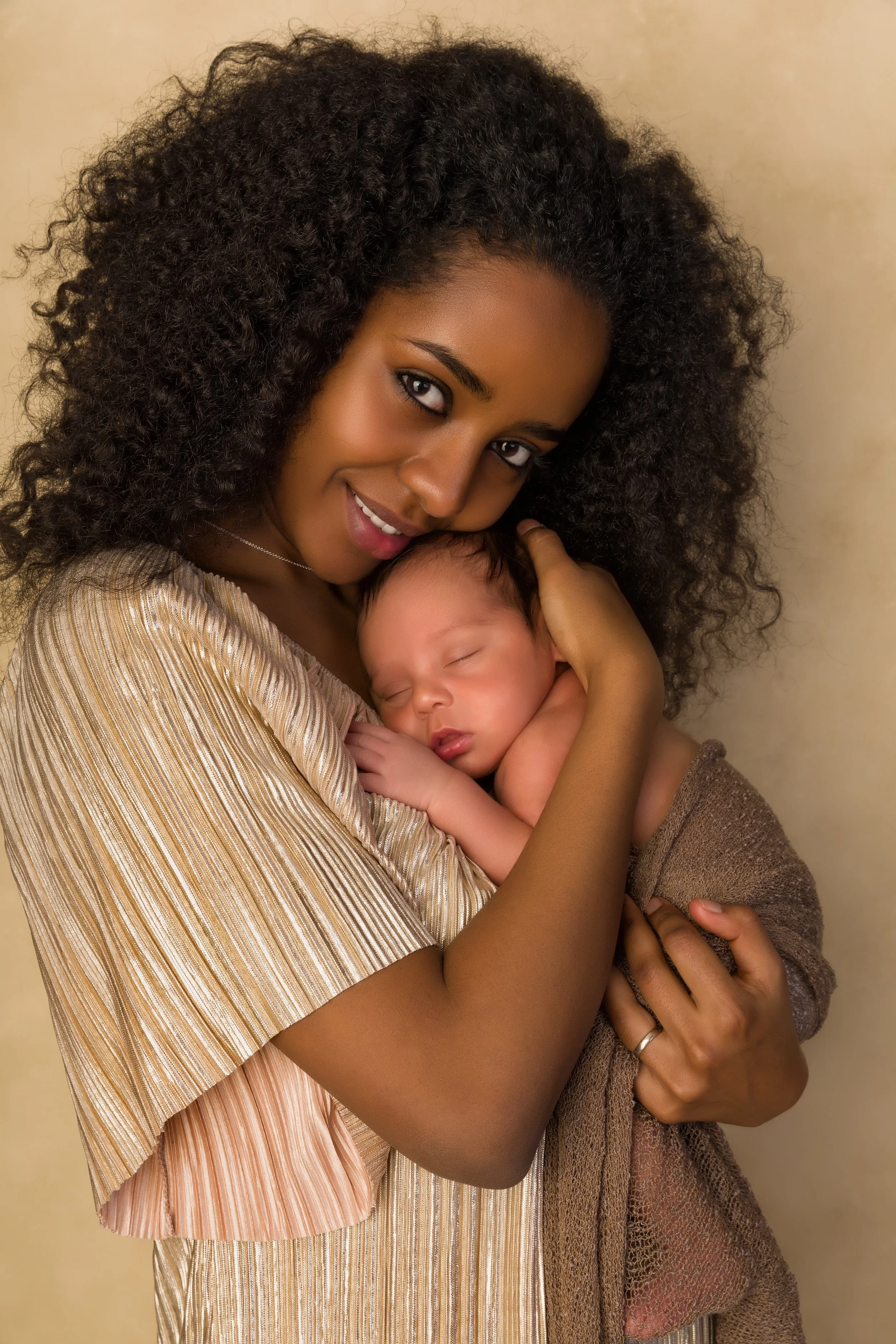
That myth still shows up in hospitals today. The disparities still exist even in imagery less visuals of black pregnant bodies and even less imagery of black breastfeeding people. Because of these disparities Black Maternal Health Week and Black Breastfeeding Week exist and are causes we support here at One Love.

Where Does One Love Fit Into This?
From the beginning, our mission has been clear. At One Love Doula Services, we exist to provide unbiased, compassionate, and culturally aware support to families throughout pregnancy, birth, and postpartum.
We intentionally create a safe, inclusive, and affirming space for all people—regardless of race, ethnicity, gender identity, sexual orientation, or socioeconomic status.
And for Black and Brown birthing people, safety is not optional. It is essential.
What Role Do Doulas Play?
Doulas have worked tirelessly to be welcomed in all birth spaces—especially hospitals where advocacy is often needed most.
Our role is not to speak for our clients, but to support them in being heard.
In cases like the now widely discussed experience of Mercedes Wells in Indiana, a doula’s presence can make a meaningful difference. A doula would have calmly reiterated that the birthing person was in active labor and encouraged staff to reevaluate their plan before sending her home.
While doulas cannot guarantee outcomes, we serve as a bridge between medical staff and the birthing client. We help ensure concerns are acknowledged, questions are answered, and decisions are made with clarity—not dismissal and this role is especially vital for black and brown women.
One Love offers complimentary birth planning sessions for all black and brown people as one of our internal missions to end racial disparities because we know the more knowledge you absorb, the better experience you will have. Together we can make changes one little wave at a time.
Thoughts from Jessica, Mother, Birth Doula, One Love Doula Education and Outreach Coordinator, and Black Maternal Health ALLY
A Personal Reflection
As a white woman and a doula, I carry a deep responsibility when I walk into birth spaces with black and brown families. I am constantly aware that my lived experience is different and that I move through the world, and through the healthcare system, with a privilege my clients do not always receive. That awareness shapes how I show up, how I listen, and how fiercely I advocate.
Attending the 2025 Black Maternal Health Brunch and Learn here in Tampa Bay only strengthened that commitment. I sat in a room full of powerful voices. Voices of mothers, birth workers, healthcare providers, all sharing stories of what they’ve endured in our own local hospitals or neglect at the hands of providers. Stories of disbelief. Stories of pain being minimized. Stories of people being told to wait, to quiet down, to “prove” they were suffering. Stories that mirrored the viral videos circulating online, only these didn’t happen in another state or another system. They happened right here, in the very spaces where we expect safety and respect.
Listening to these experiences made my blood boil. It also broke my heart.
No one should have to fight to be treated with dignity during pregnancy or while giving birth. No one should have to fear being ignored in their moment of greatest vulnerability. And yet, these stories aren’t rare. They’re repeated quietly, privately, far more often than most people want to believe.
Sitting in that room, I was reminded again that allyship is not passive. It is not simply caring. It is action. It is accountability. It is using my voice, my access, and my privilege to make sure my clients are seen, heard, and valued. It is doing my own internal work so I don’t perpetuate harm. It is listening deeply and responding with humility. And it is standing beside Black and Brown women and birthing people in a way that centers their experience, not my own.
The pain shared in that space fuels my purpose at One Love. It drives me to advocate harder. To hold space more intentionally and to ensure that when my clients walk into a birth setting, they feel supported not only by me, but by an entire community determined to protect them.
I left that event with a renewed promise:
To keep learning (and unlearning old rhetoric).
To keep listening.
To keep showing up.
And to keep fighting for a world where these stories are no longer the norm, because every mother deserves safety, respect, and love.
How do we incite REAL change?
The videos we’re seeing online aren’t rare mistakes, they’re reminders of a system that has been failing Black and Brown birthing people for generations. Now that these moments are being recorded, we can’t ignore them anymore. But seeing the problem isn’t enough. We need real change.
Care over policy.
Hospitals must put care first, not policy, not paperwork.
If someone says they’re pushing, staff should believe them and act quickly. No one in active labor should be questioned or brushed off.
Give bias serious consideration.
Too many black women are ignored or doubted because of harmful stereotypes that go back centuries. Training isn’t helpful unless providers actually learn from it and change how they treat people.
Representation matters.
Families feel safer and more understood when their care team reflects their culture and experiences. We need more people of color as doulas, nurses, midwives, and doctors in these spaces.
Community support.
We know doulas, midwives, and culturally aware care improve birth outcomes but they’re still out of reach for many families. Insurance companies and hospitals should be supporting these services, not limiting them.
LISTEN.
When someone says they’re in pain, scared, or not being heard, their care team should respond with urgency and compassion. Listening can save lives.
The need for change is immediate. Lives are on the line.
Doulas can’t fix the whole system, but we are part of the solution. We educate, we support, and we help families feel seen and heard. And with every birth, we move a little closer to the respectful, safe care all families deserve.
Evidenced Based Birth states that access to continuous labor support from a doula or other labor support professional is especially vital for Black, Indigenous, and birthing families of color. A 2022 analysis of responses from 1,977 women in the 2018 Listening to Mothers in California survey found that women of color and those who received Medi-Cal insurance who reported having a doula present with them during birth were more likely to report experiencing respectful care during labor and birth than those who did not (Mallick, Thoma, & Shenassa 2022).
While doulas cannot guarantee outcomes, we serve as a bridge between medical staff and the birthing client. We help ensure concerns are acknowledged, questions are answered, and decisions are made with clarity—not dismissal and this role is especially vital for black and brown women.
One Love offers complimentary birth planning sessions for all black and brown people as one of our internal missions to end racial disparities because we know the more knowledge you absorb, the better experience you will have. Together we can make changes one little wave at a time.
Are you searching for doula services in the Tampa Bay area? Wondering where to find a lactation consultant nearby? Look no further! One Love provides comprehensive support for expectant and new parents in Tampa, St. Petersburg, Land O’ Lakes, Lakeland, Plant City, Downtown Tampa, and beyond.
Our services include Tampa doula support, childbirth education, placenta encapsulation, in-home postpartum doula care, specialized lactation support by our CLC’s and IBCLC’s, and birth photography! Plus, we offer virtual services to accommodate your needs. Let's embark on your amazing birth and postpartum journey together!
All with,